









1060 Brands 3354 Models 24144 Galleries 15268 Typefaces 6273 Patents
Home » DM » Robust » 1942 #417053
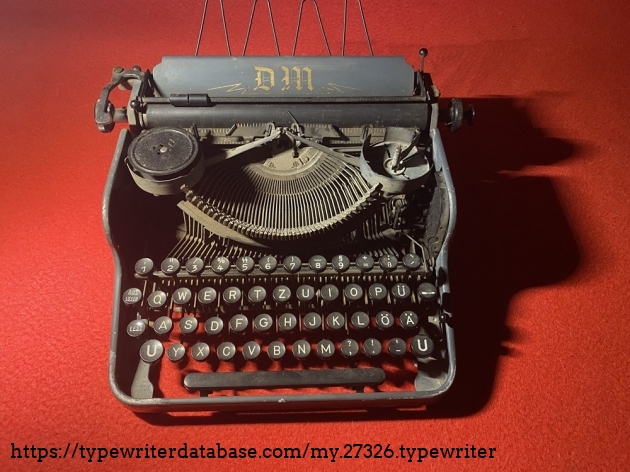
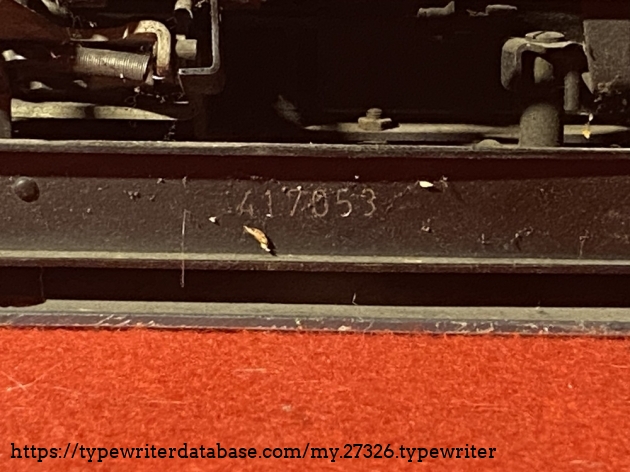
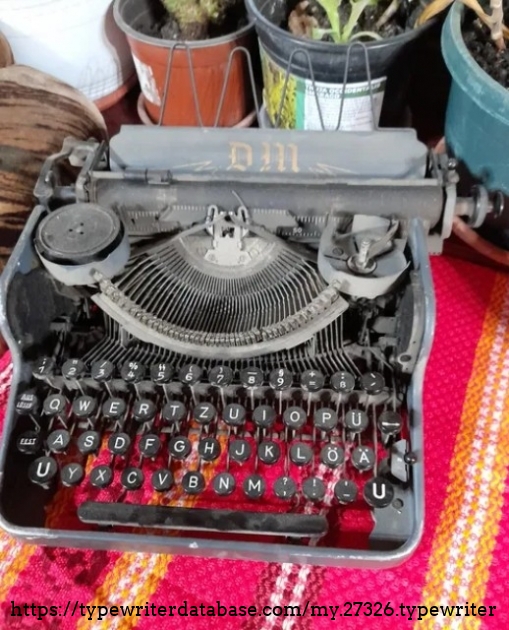
1942 DM Robust Serial # 417053 1942 DM Robust typewriter, Serial # 417053 Paolo Dal Chiele's 1942 DM Robust typewriter. 2026-02-04 From the Virtual Typewriter Collection of Paolo Dal Chiele: 1942 DM Robust Serial # 417053 I saw the ad over a year ago: the typewriter was unusual, a Robust branded DM. The typewriter appeared to be all original but in a deplorable condition and incomplete. The price was exorbitant, and the short description of the ad was suspicious:
"Old typewriter, brand DM found in the basement, after demolishing a house, not restored, for those interested in taking an offer."
Since the seller was adamant in his request, I gave up.
After about a year, the ad resurfaced, identical, including the unrealistic and non-negotiable price request. I decided to give it another try, this time by phone, and surprisingly, I realized that the story probably wasn't made up.
Without me asking, the seller told me that he had personally found the typewriter during the demolition of a house in Buzau, a city about 100 km NE of Bucharest, and that it was locked up in a wooden box he had to break open to get it out. Intrigued by the unexpected remark, I asked him to describe the crate in detail, and the description he gave me perfectly matched the specific wooden box of the Robust model.

The story
But what's the point of hiding a typewriter behind a wall in a basement? Even assuming that owning a DM Robust could have been, at some point in time, compromising, why brick it up and not simply find a way to get rid of it or bury it?
It's objectively unlikely, unless this solution was the only viable, any other solution posing serious risks, at least as serious as being discovered in possession of a German typewriter.
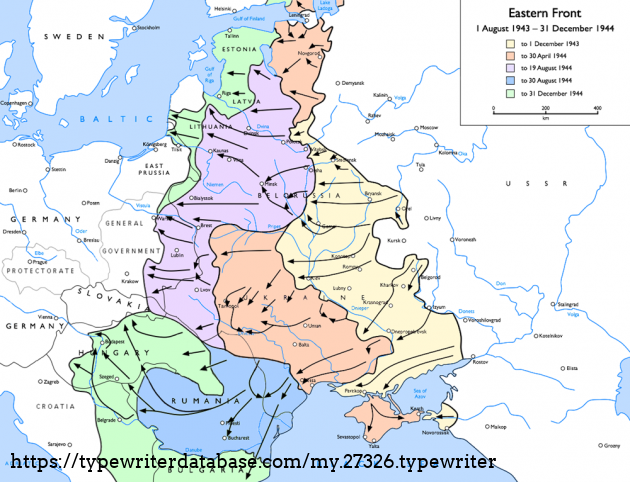
Doing quick historical research, I discovered that all these conditions indeed existed in the place where the typewriter was found in the days after August 23, 1944, when, following the overthrow of the alliance between Romania and Germany, the Red Army broke through the southeastern front and within a week reached the border with Hungary (see map in the photo section).
The breaking of the front that followed the decision of King Mihai of Romania took everyone by surprise, especially the Germans: the Romanian army went from ally to enemy, allowing the Red Army to advance at breakneck speed. The chaotic retreat that followed was particularly bloody, with the Germans literally having to fight their way through, fighting against old enemies in front and former allies in the rear. Many groups of German soldiers were surrounded, or found their chaotic retreat already blocked by the Russian advance guard.
One of the most notorious clashes of those days occurred in Buzau.
For three or four days, the German troops retreating toward Germany had been pursued by the Romanian army. One of the escape routes ran through the city of Buzau. According to contemporary accounts, the Germans heading toward Buzau seemed very frightened; they had suffered heavy losses in the past few days and, after being hard-pressed by the Romanian army, were exhausted.
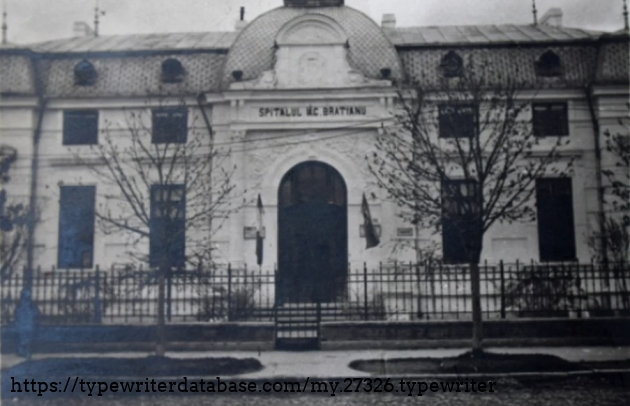
The Germans entered Buzau through the area of the Jewish cemetery. But they found themselves directly facing the Soviet advance guard, who had barricaded themselves behind the wrought-iron fence surrounding the hospital. The fighting lasted about half an hour, and the surviving Germans were eventually captured.
That iron fence still stands, with bullet holes from this battle.
Around 2:00 PM on August 27, 1944, as German troops continued to retreat under artillery fire and bombs, Soviet troops appeared at the gates of Buzau, accompanied by tanks and other armored vehicles, and would not leave until July 10, 1958 (it is not a typo, it is about 14 years later).
In this context, it is likely that the typewriter was owned not by a soldier, but by a resident or a civilian official in the rear, who, to avoid arousing suspicion, decided to get rid of anything that might be compromising. The problem is that getting rid of a typewriter is not easy, especially in those chaotic days when even not wearing a uniform didn't guarantee safety, given the number of deserters who were trying everything they could to quickly retreat to Transylvania.
In summary: the story seems true, and the historical circumstances seem to confirm it. Result: I bought it.

The typewriter
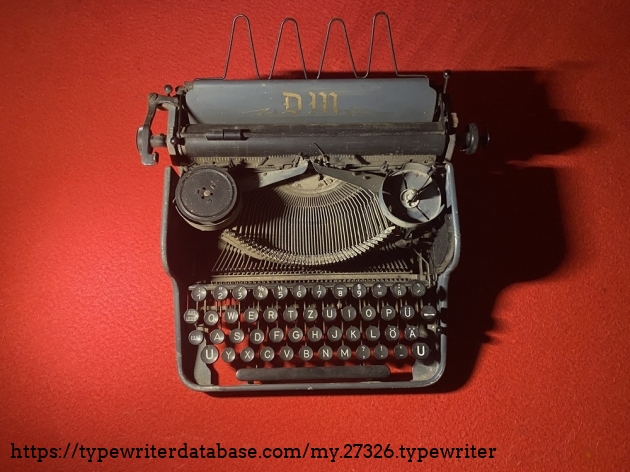
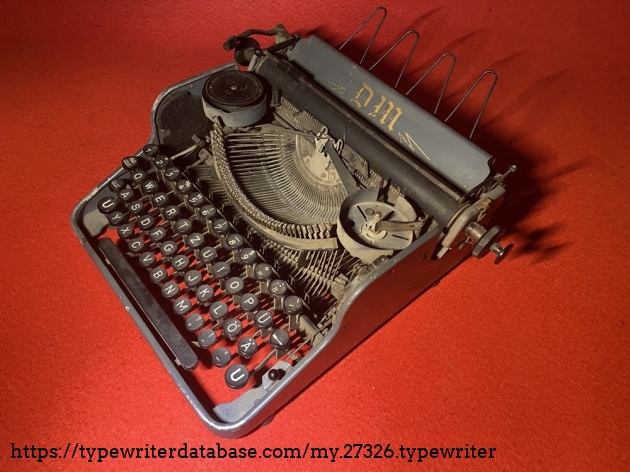
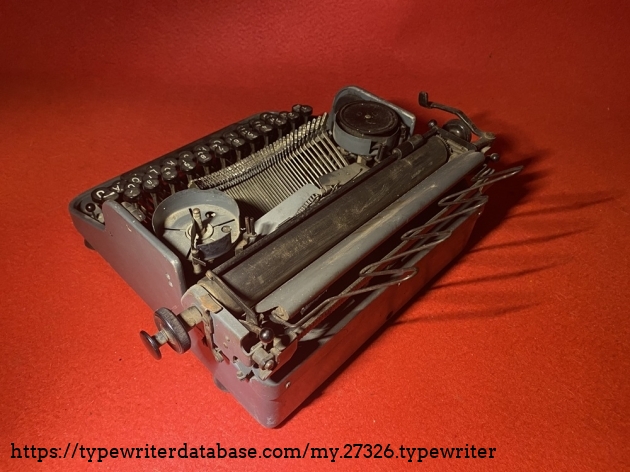
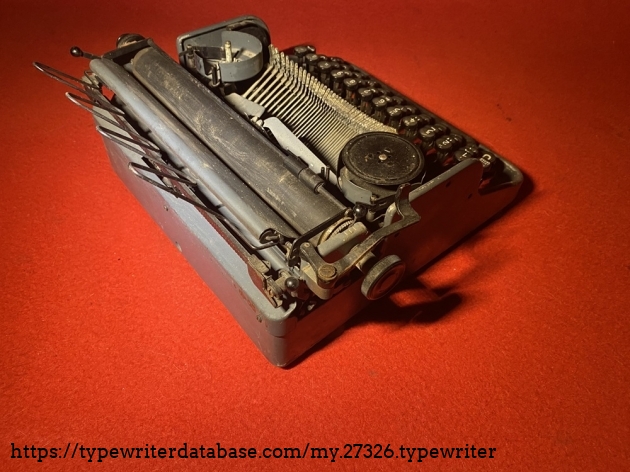
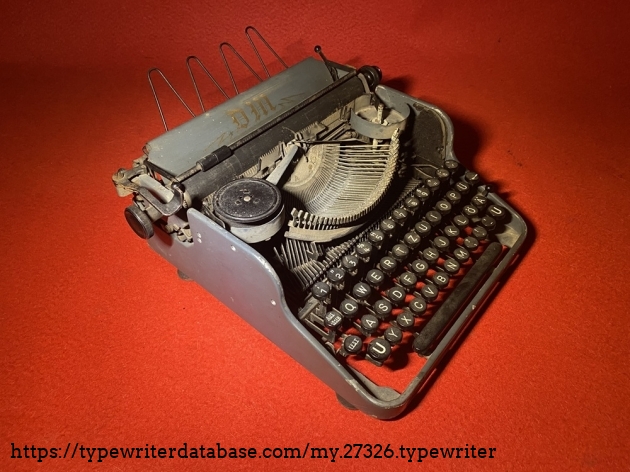
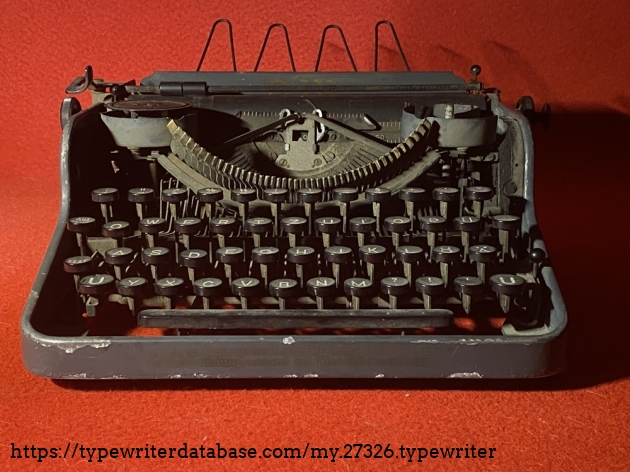
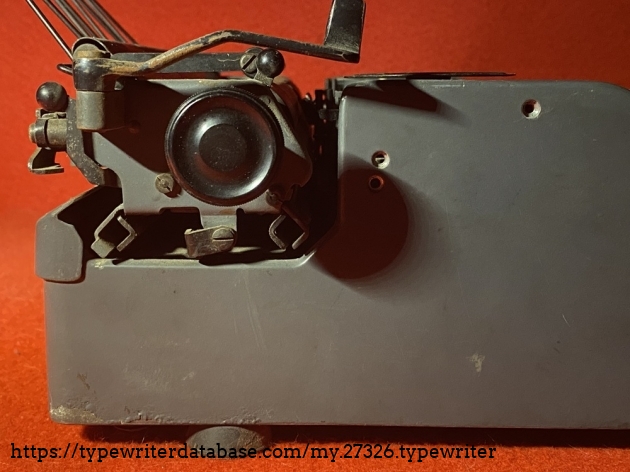
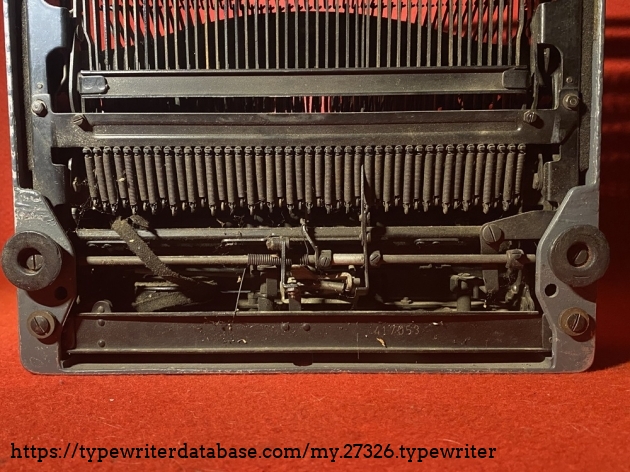
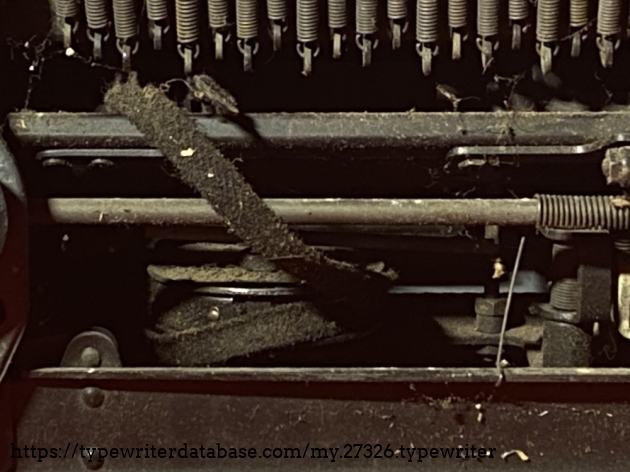
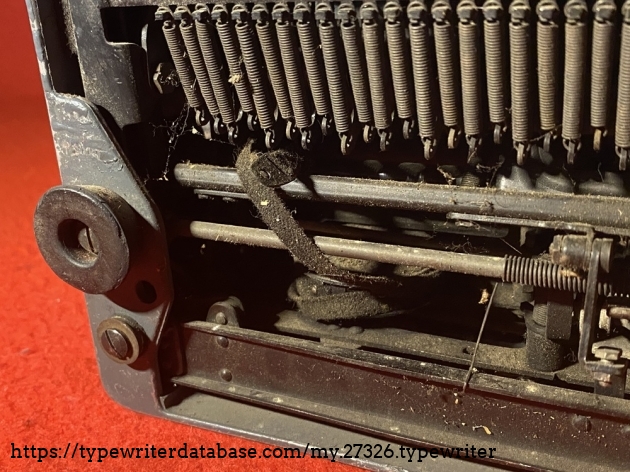
The machine is in terrible but not dramatic condition: everything is jammed, the lid is missing, the right lid support is missing, the return cable is disconnected (but appears intact), and other surprises are sure to await. The Robust is, however, a relatively easy typewriter to restore, especially since the restoration will be conservative, without altering its original condition.
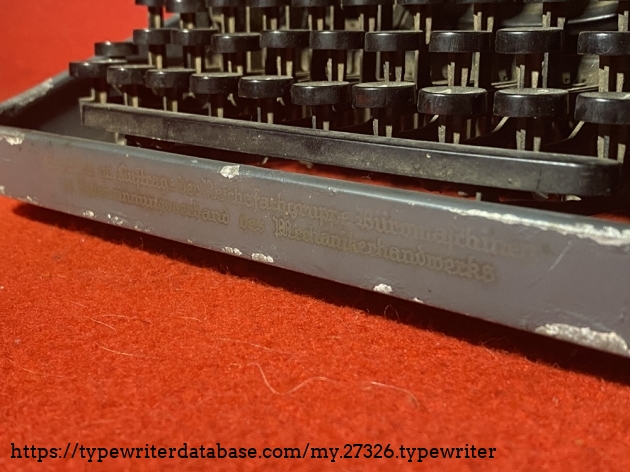
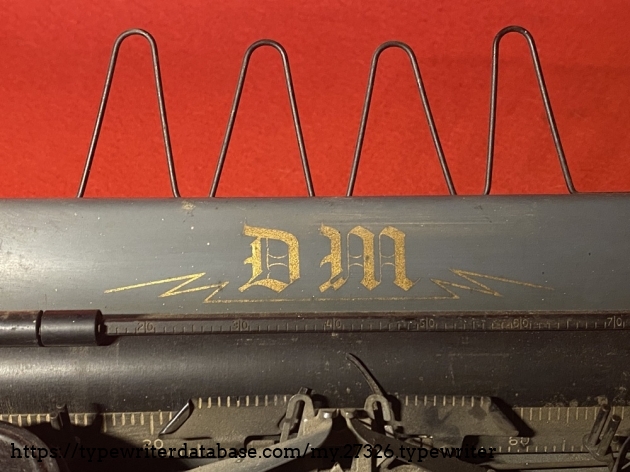
The "DM" logo on the paper support is in fair condition, as it is the writing on the front of the body (written in in fraktur):
Hergestellt in auftrage der Reichsfachgruppe Büromaschinen im Reichsinnungsverhand des Mechanikerhandwerks
(Produced on behalf of the Reich Specialist Group for Office Machines within the Reich Mechanical Crafts Guild)
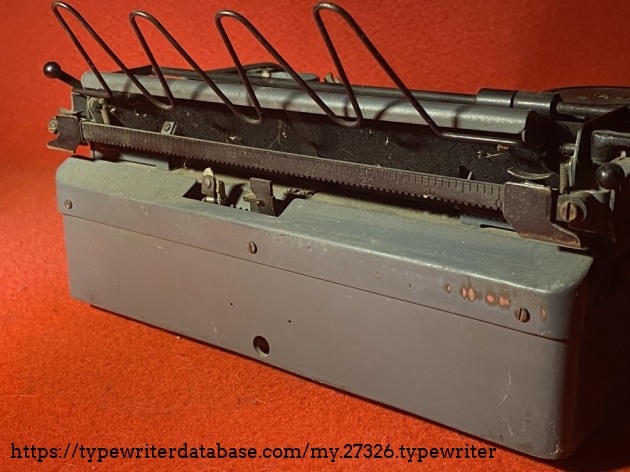
Even without the characteristic lever cover, a Robust model can be recognized by other specific details, such as the segment guards protecting it from debris, the colour scheme ant the additional protection over the rear body panel. It is therefore certainly a Robust model intended for the armed forces, which was equipped with a trapezoidal wooden transport case instead of the lightweight case of the civilian models.
1. The overall condition
The machine's current condition is most likely the same as when it was hidden, meaning the typewriter was not functional. This means it was either abandoned and then found by a local, or it was exchanged for something, and the person who accepted it did so with the intention of repairing it when times were better. Subsequent events then forced the owner to find a way to dispose of it.
2. The ribbon spool
A interesting details that confirms this reconstruction is the only metal ribbon spool that remains, which is of a type compatible with those used during the war, which would confirm that the machine has not actually been used since then.
3. The Runes
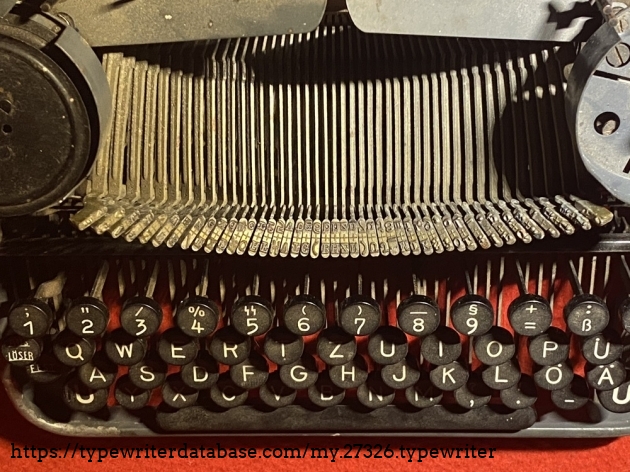
A third detail that confirms the story is that the surviving typewriters used after the war did not retain the keys and typebar with the runes, as in the case of another Olympia Robust that I own. Considering the seriousness of the crime of possessing undeclared typewriters during the Communist era (the security regime was the same as that for firearms and explosives), it is unlikely that anyone knowingly took this risk, which supports the hypothesis that the typewriter was hidden and forgotten.

The DM brand
The use of the DM brand by Olympia must be placed in the context of the dynamics of reorganisation of German industrial production which began in the mid-1930s and which culminated in the war-oriented planned economy through the Four Year Plan (initiated 1936).
Ernst Martin, in his work Die Schreibmaschine und ihre Etwicklungsgeschichte, tells us that "Olympia office and portable typewriters were marked with the names Diplomat and DM for specific customer groups."
The Reich Guild Associations (Reichsinnungsverhand) were established in 1935 as subdivisions of the Reich Crafts Group, with the task of supporting the work of craft associations and government agencies through expert opinions and consultancy. The Reich Crafts Group was divided into 52 Reich Guild Associations, which each had independent specialist groups.
Within the Reich Guild Association for Mechanical Crafts (Reichsinnungsverhand des Mechanikerhandwerks), there were specialist groups for various sectors, one of which was the Reich Specialist Group for Office Machines (Reichsfachgruppe Büromaschinen), specifically responsible for the trade and production of office machines. The DM was produced specifically for this specialist group.

1942 DM Robust #417053

Status: My Collection
Hunter: Paolo Dal Chiele (pdcox)
Created: 02-04-2026 at 01:34AM
Last Edit: 02-04-2026 at 02:44AM


Description:

I saw the ad over a year ago: the typewriter was unusual, a Robust branded DM. The typewriter appeared to be all original but in a deplorable condition and incomplete. The price was exorbitant, and the short description of the ad was suspicious:
"Old typewriter, brand DM found in the basement, after demolishing a house, not restored, for those interested in taking an offer."
Since the seller was adamant in his request, I gave up.
After about a year, the ad resurfaced, identical, including the unrealistic and non-negotiable price request. I decided to give it another try, this time by phone, and surprisingly, I realized that the story probably wasn't made up.
Without me asking, the seller told me that he had personally found the typewriter during the demolition of a house in Buzau, a city about 100 km NE of Bucharest, and that it was locked up in a wooden box he had to break open to get it out. Intrigued by the unexpected remark, I asked him to describe the crate in detail, and the description he gave me perfectly matched the specific wooden box of the Robust model.

The story
But what's the point of hiding a typewriter behind a wall in a basement? Even assuming that owning a DM Robust could have been, at some point in time, compromising, why brick it up and not simply find a way to get rid of it or bury it?
It's objectively unlikely, unless this solution was the only viable, any other solution posing serious risks, at least as serious as being discovered in possession of a German typewriter.
Doing quick historical research, I discovered that all these conditions indeed existed in the place where the typewriter was found in the days after August 23, 1944, when, following the overthrow of the alliance between Romania and Germany, the Red Army broke through the southeastern front and within a week reached the border with Hungary (see map in the photo section).
The breaking of the front that followed the decision of King Mihai of Romania took everyone by surprise, especially the Germans: the Romanian army went from ally to enemy, allowing the Red Army to advance at breakneck speed. The chaotic retreat that followed was particularly bloody, with the Germans literally having to fight their way through, fighting against old enemies in front and former allies in the rear. Many groups of German soldiers were surrounded, or found their chaotic retreat already blocked by the Russian advance guard.
One of the most notorious clashes of those days occurred in Buzau.
For three or four days, the German troops retreating toward Germany had been pursued by the Romanian army. One of the escape routes ran through the city of Buzau. According to contemporary accounts, the Germans heading toward Buzau seemed very frightened; they had suffered heavy losses in the past few days and, after being hard-pressed by the Romanian army, were exhausted.
The Germans entered Buzau through the area of the Jewish cemetery. But they found themselves directly facing the Soviet advance guard, who had barricaded themselves behind the wrought-iron fence surrounding the hospital. The fighting lasted about half an hour, and the surviving Germans were eventually captured.
That iron fence still stands, with bullet holes from this battle.
Around 2:00 PM on August 27, 1944, as German troops continued to retreat under artillery fire and bombs, Soviet troops appeared at the gates of Buzau, accompanied by tanks and other armored vehicles, and would not leave until July 10, 1958 (it is not a typo, it is about 14 years later).
In this context, it is likely that the typewriter was owned not by a soldier, but by a resident or a civilian official in the rear, who, to avoid arousing suspicion, decided to get rid of anything that might be compromising. The problem is that getting rid of a typewriter is not easy, especially in those chaotic days when even not wearing a uniform didn't guarantee safety, given the number of deserters who were trying everything they could to quickly retreat to Transylvania.
In summary: the story seems true, and the historical circumstances seem to confirm it. Result: I bought it.

The typewriter
The machine is in terrible but not dramatic condition: everything is jammed, the lid is missing, the right lid support is missing, the return cable is disconnected (but appears intact), and other surprises are sure to await. The Robust is, however, a relatively easy typewriter to restore, especially since the restoration will be conservative, without altering its original condition.
The "DM" logo on the paper support is in fair condition, as it is the writing on the front of the body (written in in fraktur):
Hergestellt in auftrage der Reichsfachgruppe Büromaschinen im Reichsinnungsverhand des Mechanikerhandwerks
(Produced on behalf of the Reich Specialist Group for Office Machines within the Reich Mechanical Crafts Guild)
Even without the characteristic lever cover, a Robust model can be recognized by other specific details, such as the segment guards protecting it from debris, the colour scheme ant the additional protection over the rear body panel. It is therefore certainly a Robust model intended for the armed forces, which was equipped with a trapezoidal wooden transport case instead of the lightweight case of the civilian models.
1. The overall condition
The machine's current condition is most likely the same as when it was hidden, meaning the typewriter was not functional. This means it was either abandoned and then found by a local, or it was exchanged for something, and the person who accepted it did so with the intention of repairing it when times were better. Subsequent events then forced the owner to find a way to dispose of it.
2. The ribbon spool
A interesting details that confirms this reconstruction is the only metal ribbon spool that remains, which is of a type compatible with those used during the war, which would confirm that the machine has not actually been used since then.
3. The Runes
A third detail that confirms the story is that the surviving typewriters used after the war did not retain the keys and typebar with the runes, as in the case of another Olympia Robust that I own. Considering the seriousness of the crime of possessing undeclared typewriters during the Communist era (the security regime was the same as that for firearms and explosives), it is unlikely that anyone knowingly took this risk, which supports the hypothesis that the typewriter was hidden and forgotten.

The DM brand
The use of the DM brand by Olympia must be placed in the context of the dynamics of reorganisation of German industrial production which began in the mid-1930s and which culminated in the war-oriented planned economy through the Four Year Plan (initiated 1936).
Ernst Martin, in his work Die Schreibmaschine und ihre Etwicklungsgeschichte, tells us that "Olympia office and portable typewriters were marked with the names Diplomat and DM for specific customer groups."
The Reich Guild Associations (Reichsinnungsverhand) were established in 1935 as subdivisions of the Reich Crafts Group, with the task of supporting the work of craft associations and government agencies through expert opinions and consultancy. The Reich Crafts Group was divided into 52 Reich Guild Associations, which each had independent specialist groups.
Within the Reich Guild Association for Mechanical Crafts (Reichsinnungsverhand des Mechanikerhandwerks), there were specialist groups for various sectors, one of which was the Reich Specialist Group for Office Machines (Reichsfachgruppe Büromaschinen), specifically responsible for the trade and production of office machines. The DM was produced specifically for this specialist group.

Typeface Specimen:

Links:

Photos:
The ad
The ad

The evolution of the eastern front from August 1943 to December 1944

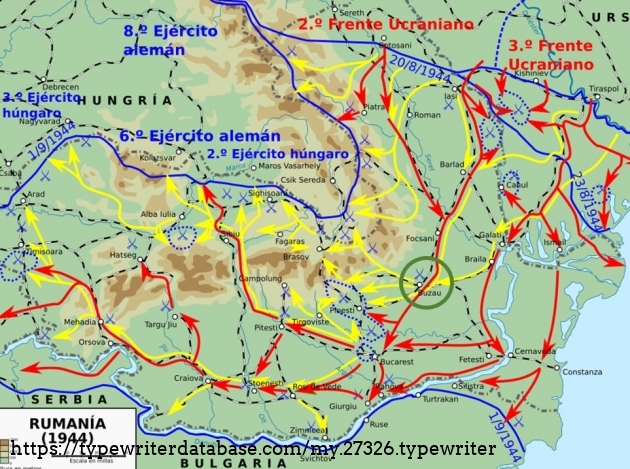
The evolution of the south east front from August 20, 1944 to September 1, 1944. The city of Buzau is indicated. In red the movement of the Red Army; in yellow the movement of the Romanian army: in blue the pocket of encircled Asse forces and the main battle. Buzau is in the green circle.

The hospital of Buzau where the soviets ambushed the retreating Germans. The fence still exist with the signs of the battle.

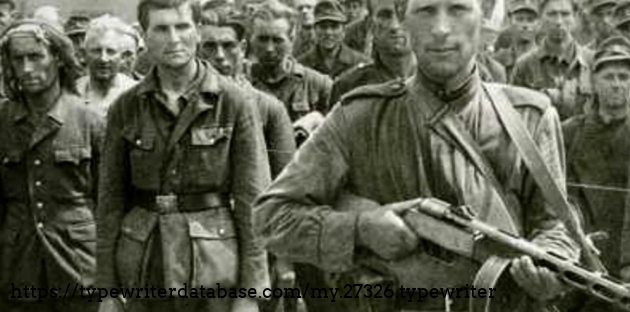
German soldiers captured by Russians in Romania after the collapse of the front.


Hunter: Paolo Dal Chiele (pdcox)

Paolo Dal Chiele's Typewriter Galleries [ My Collection ] [ My Sightings ]

Status: Typewriter Hunter
Points: 3168

Interested in historic motoring and vintage cars, I received a typewriter as a bonus when I bought and old off-road car. The previous owner had found somewhere a typewriter produced for the German army and when he sold me the car he gave me the typewriter too. As I learned later, it was a1961 Olympia SM7 Robust..
Of the typewriters I value more character than perfection, the signs that time has left and the stories - or fragments of stories - of those who used them ...


RESEARCH NOTE: When researching the DM Robust on a computer with lots of screen real estate, you may find that launching the DM Serial Number page and the DM Robust By Model/Year/Serial page in new browser windows can give you interesting perspectives on changes throughout the model series.