








1073 Brands 3478 Models 26028 Galleries 16493 Typefaces 6273 Patents
Home » Siemag » L1 » 1964 #P-263740
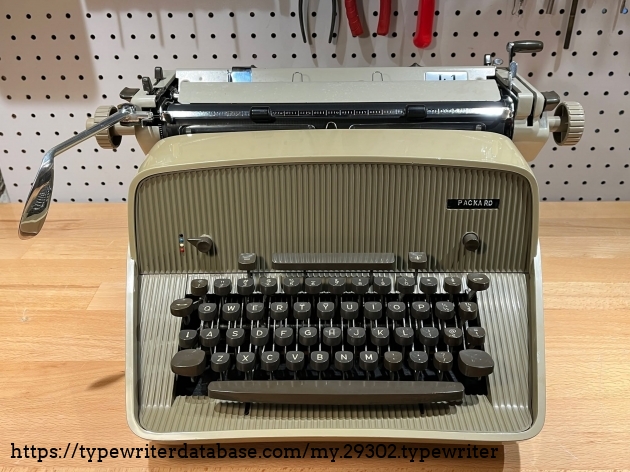
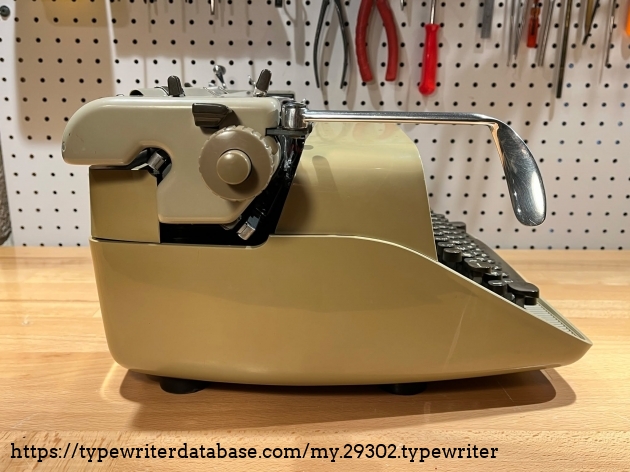
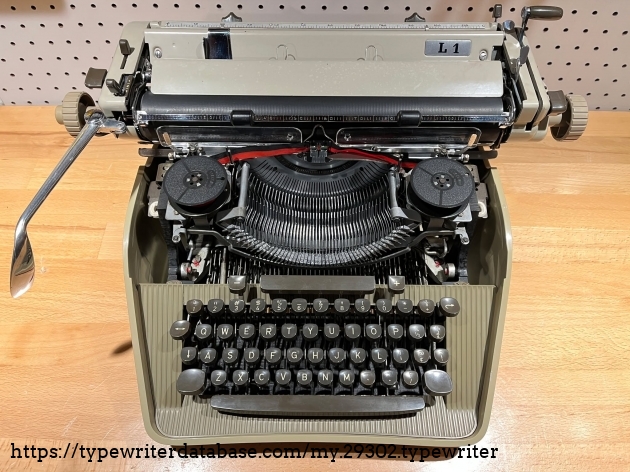
1964 Siemag L1 Serial # P-263740 1964 Siemag L1 typewriter, Serial # P-263740 Brian Hagermann's 1964 Siemag L1 typewriter. 2026-11-01 From the Virtual Typewriter Collection of Brian Hagermann: 1964 Siemag L1 Serial # P-263740 In 1963, Siegener Maschinenbau AG (Siemag) moved the entirety of their typewriter production from Eiserfeld (in Siegen, North Rhine-Westphalia, Germany) to Portugal. At the same time, they introduced their new plastic-bodied standards, the L1 and L8.

This particular L1 was made in 1964 and somehow found its way to the United States, where I found it largely forgotten under dust and grime in the Washington, D.C basement of a wonderful longtime collector of the eclectic. The L1 came standard with 46 keys, for 92 characters total. This one has a US QWERTY keyboard, which is odd for a model never sold in the US. The company tried their hand in the US market during the 1950s as “Siemag Office Machines Corp.” with offices in New York at 391 Fourth Ave.

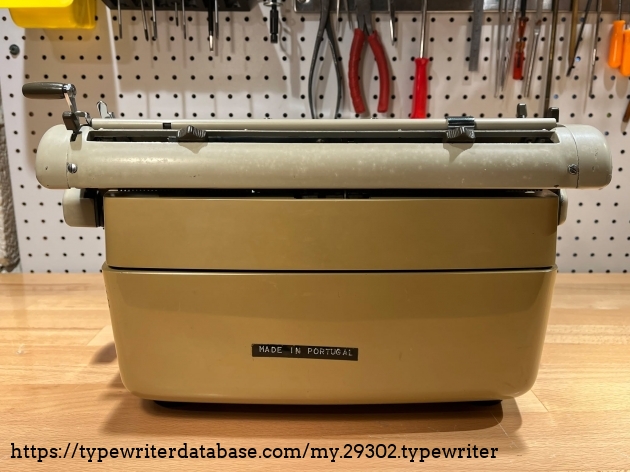
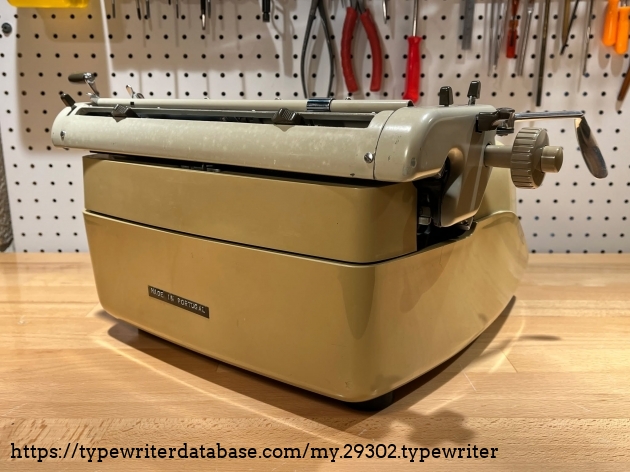
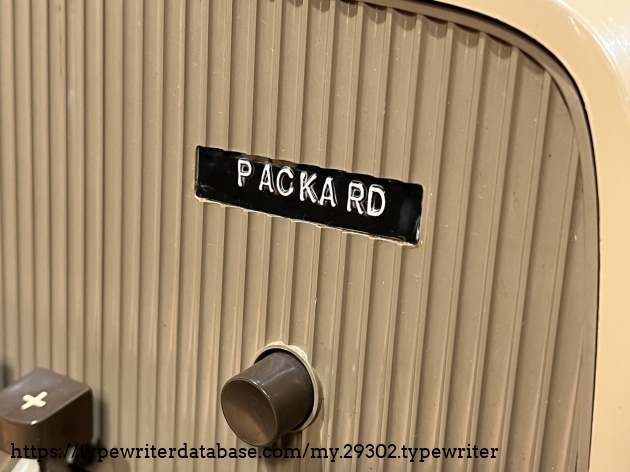
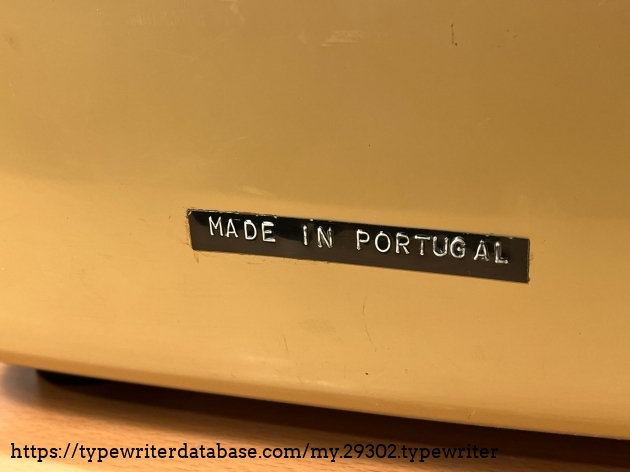
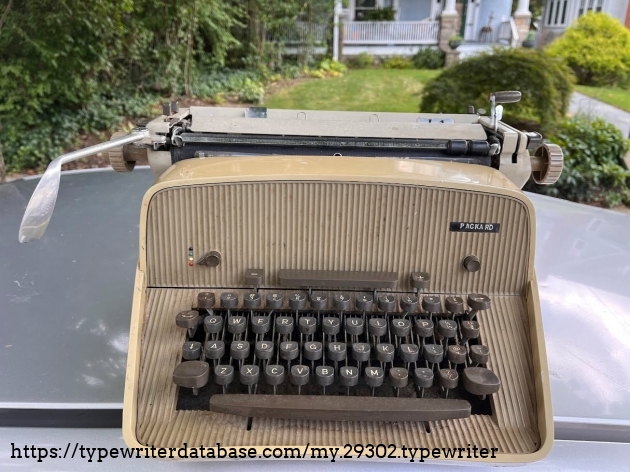
Strangely, the Siemag branding has been removed and replaced by a “PACKARD” badge created by a Dymo label maker. The addition of a similar “MADE IN PORTUGAL” label to the rear of the machine is curious, perhaps done in some semi-official capacity by an importer trying to ingratiate themselves with American investors by using a classic American brand name. More curious, perhaps, is that the Packard name was used by Montana SpA of Italy to brand their cheap Hermes Baby clones.

It is a beautifully designed and exceptionally well-built standard underneath the plastic and pot metal exterior. The mechanics rival Olympia, Adler, and the other top-tier German manufacturers. It is wonderful to type on, although it was quite a long road to return this one to such a state. Almost every facet of this typewriter needed attention, from a missing line spacing selector detent to misaligned carriage bearing trucks preventing its full travel to crumbling rubber pads on the segment shift stops. It felt like a basketcase a master mechanic might hand off to an apprentice.

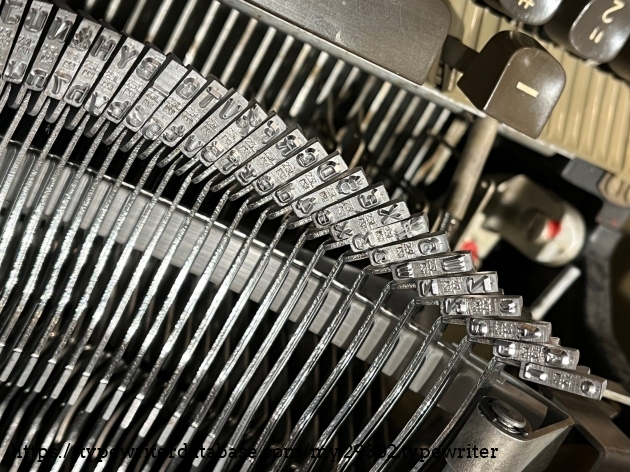
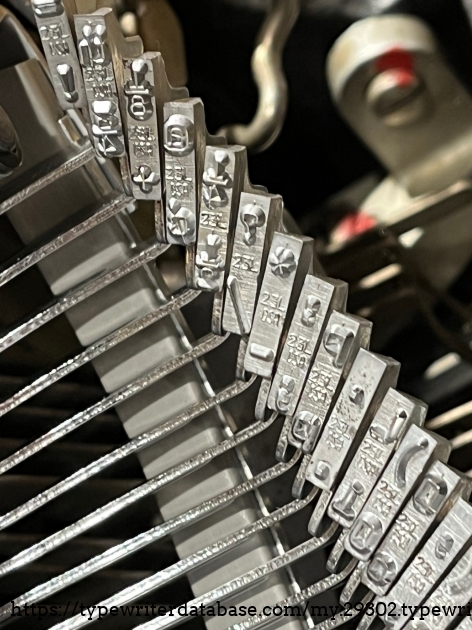
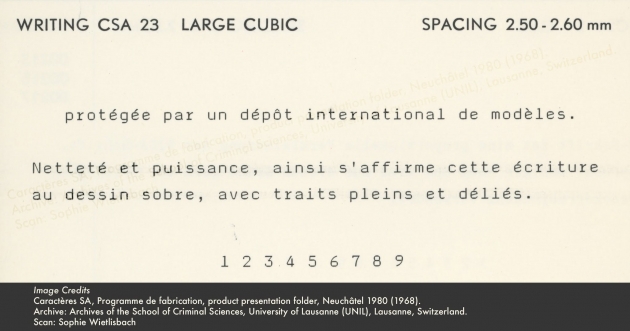
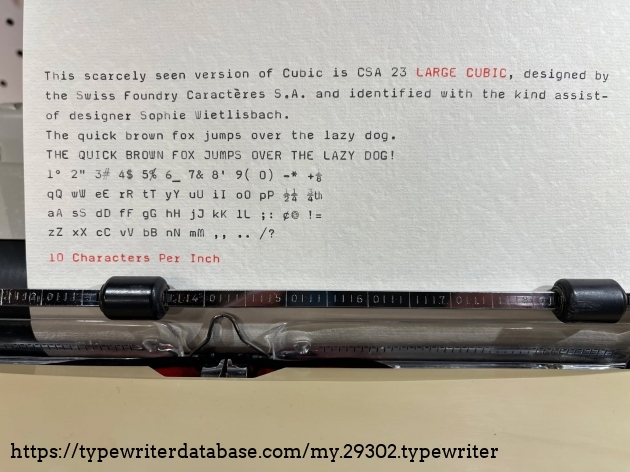
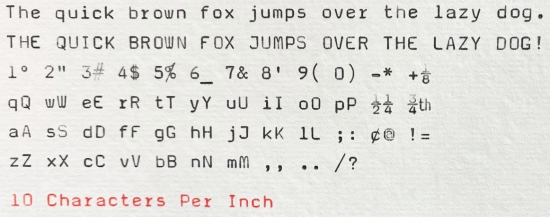
The real gem of this machine is its typeface–a variant of Cubic called LARGE CUBIC. The slugs are marked “CSA 23” and I was only able to identify the type with the help of Sophie Wietlisbach. Sophie is a graphic and type designer and author of the amazing book “Impact Type: Manufacturing Type for Typewriters in Switzerland, 1941–1997”. Highly recommended!

1964 Siemag L1 #P-263740

Status: My Collection
Hunter: Brian Hagermann (bhagermann)
Created: 11-01-2026 at 06:35PM
Last Edit: 11-01-2026 at 07:50PM


Description:

In 1963, Siegener Maschinenbau AG (Siemag) moved the entirety of their typewriter production from Eiserfeld (in Siegen, North Rhine-Westphalia, Germany) to Portugal. At the same time, they introduced their new plastic-bodied standards, the L1 and L8.

This particular L1 was made in 1964 and somehow found its way to the United States, where I found it largely forgotten under dust and grime in the Washington, D.C basement of a wonderful longtime collector of the eclectic. The L1 came standard with 46 keys, for 92 characters total. This one has a US QWERTY keyboard, which is odd for a model never sold in the US. The company tried their hand in the US market during the 1950s as “Siemag Office Machines Corp.” with offices in New York at 391 Fourth Ave.

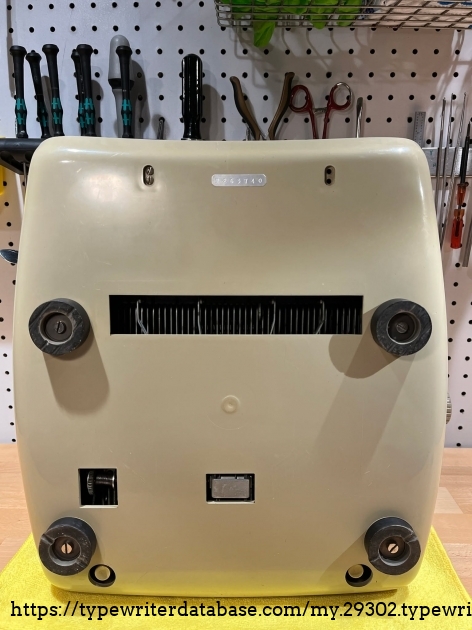
Strangely, the Siemag branding has been removed and replaced by a “PACKARD” badge created by a Dymo label maker. The addition of a similar “MADE IN PORTUGAL” label to the rear of the machine is curious, perhaps done in some semi-official capacity by an importer trying to ingratiate themselves with American investors by using a classic American brand name. More curious, perhaps, is that the Packard name was used by Montana SpA of Italy to brand their cheap Hermes Baby clones.

It is a beautifully designed and exceptionally well-built standard underneath the plastic and pot metal exterior. The mechanics rival Olympia, Adler, and the other top-tier German manufacturers. It is wonderful to type on, although it was quite a long road to return this one to such a state. Almost every facet of this typewriter needed attention, from a missing line spacing selector detent to misaligned carriage bearing trucks preventing its full travel to crumbling rubber pads on the segment shift stops. It felt like a basketcase a master mechanic might hand off to an apprentice.

The real gem of this machine is its typeface–a variant of Cubic called LARGE CUBIC. The slugs are marked “CSA 23” and I was only able to identify the type with the help of Sophie Wietlisbach. Sophie is a graphic and type designer and author of the amazing book “Impact Type: Manufacturing Type for Typewriters in Switzerland, 1941–1997”. Highly recommended!

Typeface Specimen:
Links:

Photos:
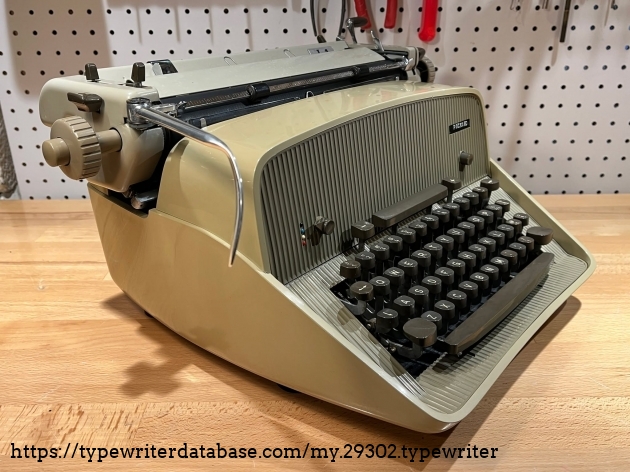


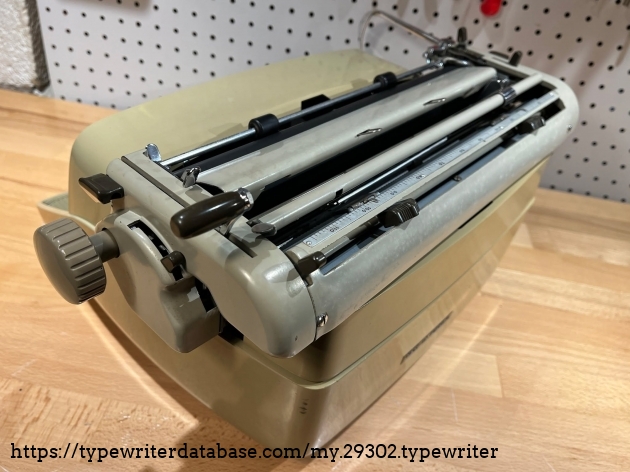
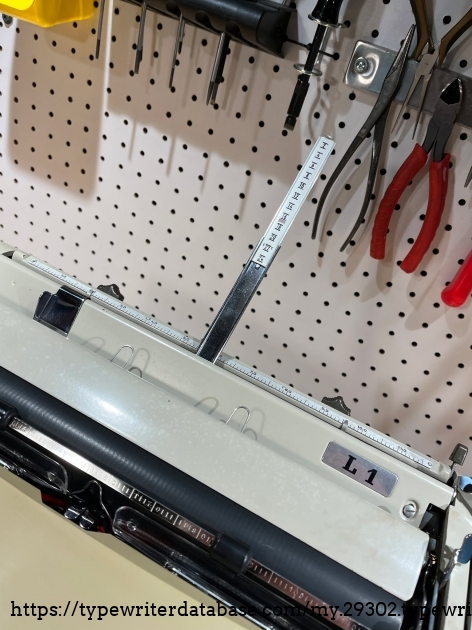
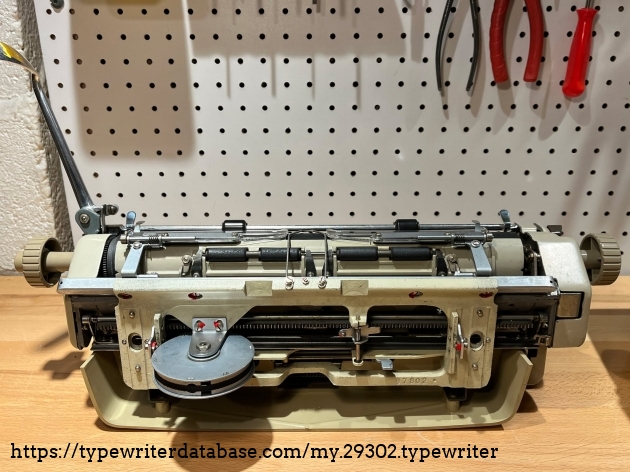
Much of the carriage is shod in painted pot metal and very similar if not identical to previous Siemag models.

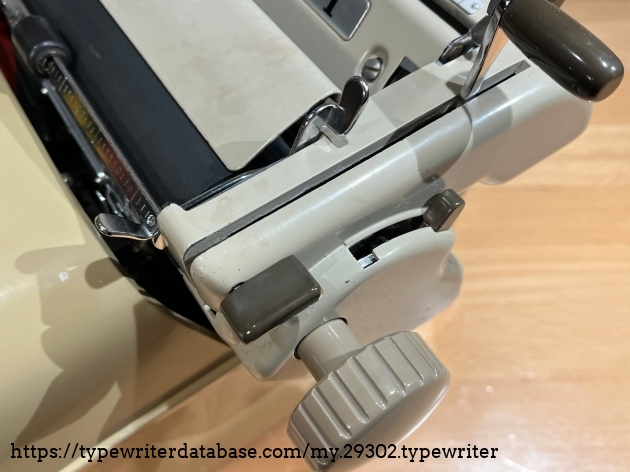
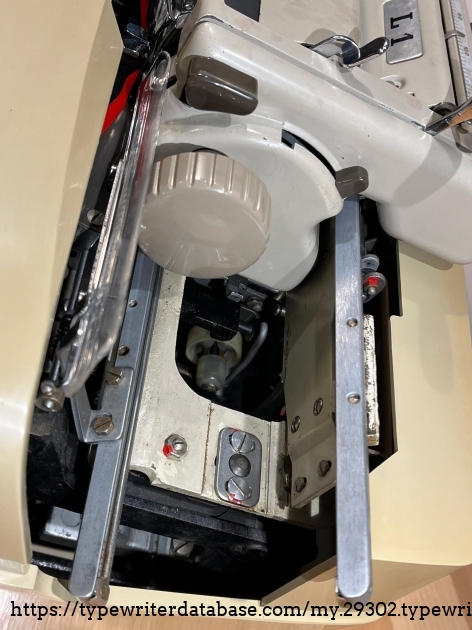
Paper injector and  line selector.  The platen is removed by unscrewing the knobs anti/counter-clockwise.  It's easier to do this on the right side with the injector set to the minimum amount of lines.
Paper injector and line selector. The platen is removed by unscrewing the knobs anti/counter-clockwise. It's easier to do this on the right side with the injector set to the minimum amount of lines.


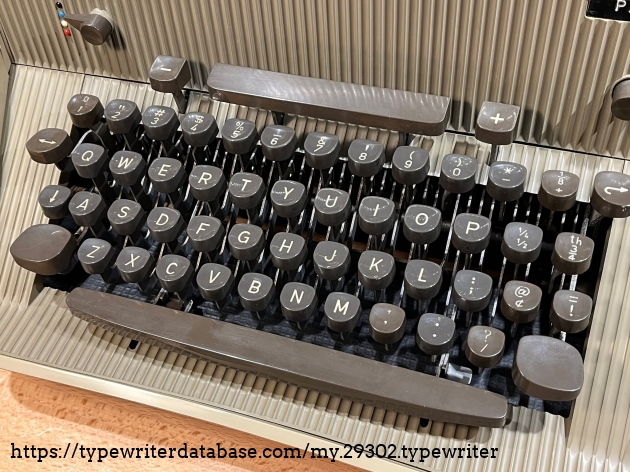
US QWERTY, with an interesting selection of fractions.

Not exactly professionally done but done for what purpose?


You can just see the centrifugal tab brake.  It works almost too well.
You can just see the centrifugal tab brake. It works almost too well.


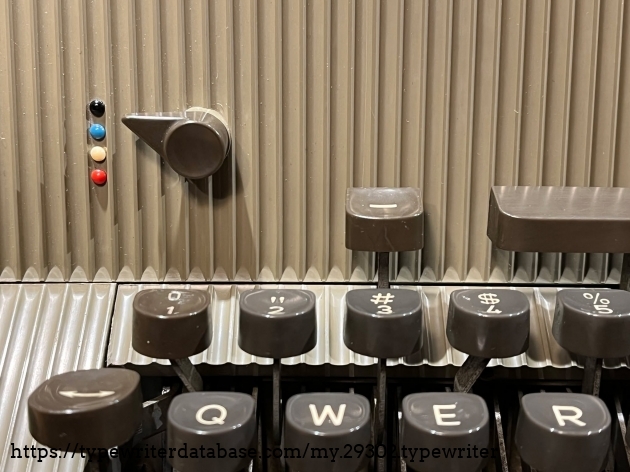
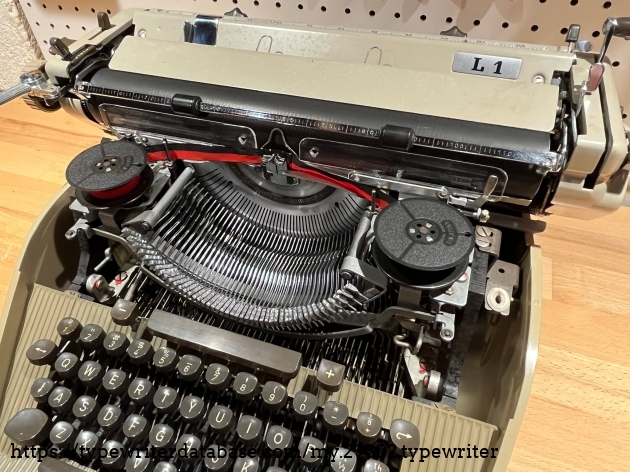
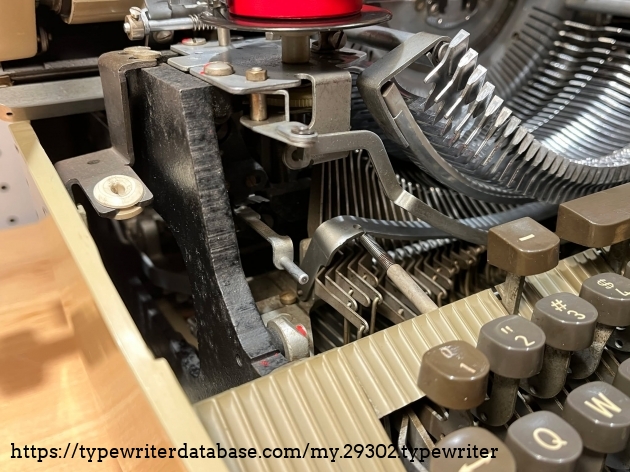
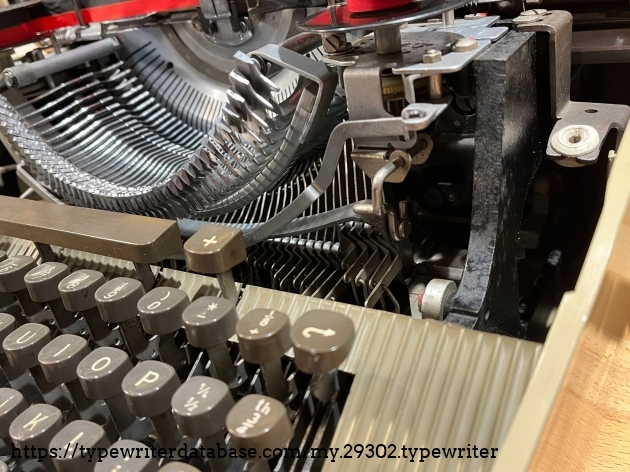
Behind the scenes of the spool cover-mounted ribbon selector and key de-jammer.

The spool mounts can only accept DIN 2103 European spools.

Ribbon selector linkage.


It's distinctly different from the standard Cubic.  Cubic is the original typeface that spawned copies like Senatorial and Techno.
It's distinctly different from the standard Cubic. Cubic is the original typeface that spawned copies like Senatorial and Techno.

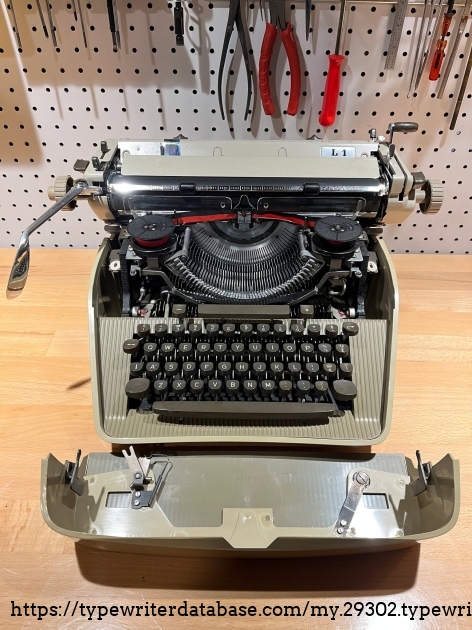
The underside showing the two carriage release buttons, which you can disengage easily with the typewriter still on its feet.

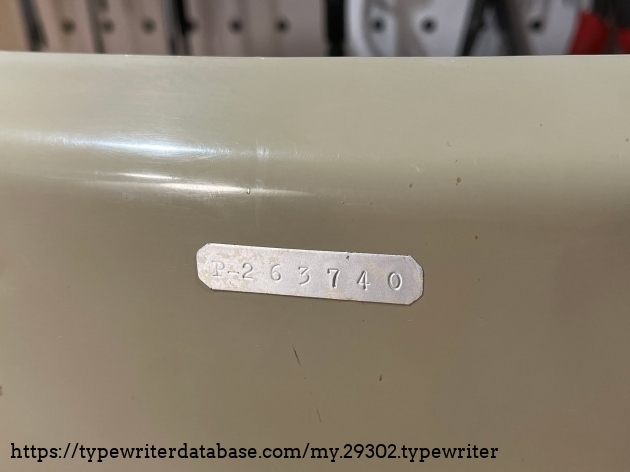
Despite a large number of matching numbers stamped into the metal of several components, THIS is the serial number.  One sticker is on the underside of the typewriter and the other is...
Despite a large number of matching numbers stamped into the metal of several components, THIS is the serial number. One sticker is on the underside of the typewriter and the other is...

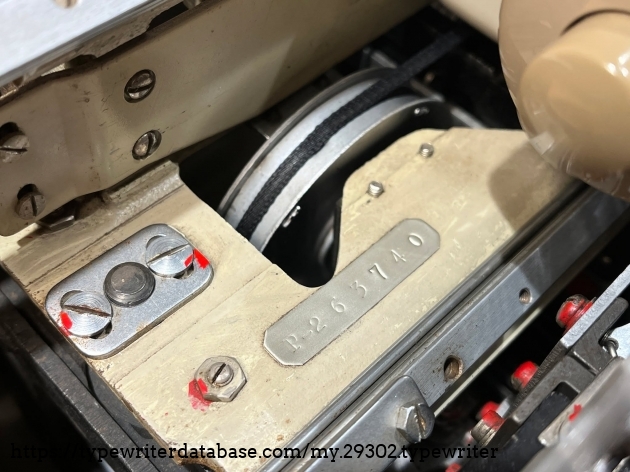
...on the left side of the carriage next to the mainspring.  The P prefix presumably points to production in Portugal.
...on the left side of the carriage next to the mainspring. The P prefix presumably points to production in Portugal.

Similar to the Adler, there's a latch that engages the carriage rack when the carriage is removed.  A nice touch.
Similar to the Adler, there's a latch that engages the carriage rack when the carriage is removed. A nice touch.

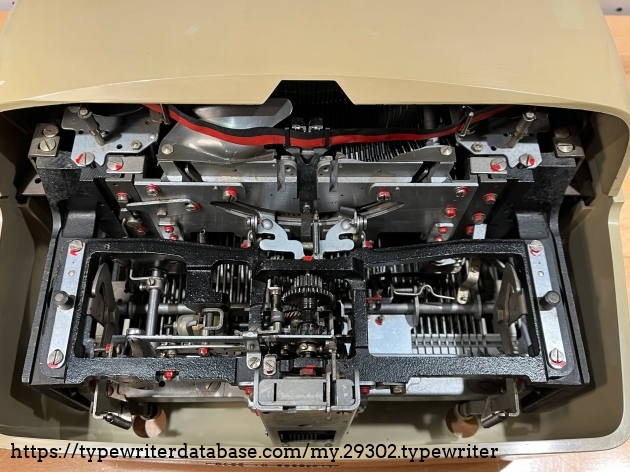
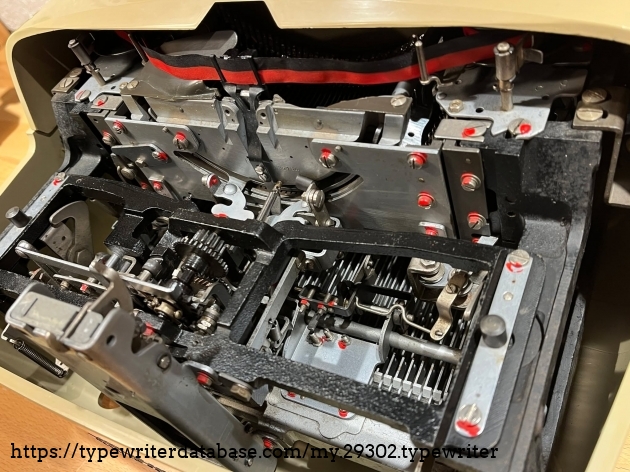
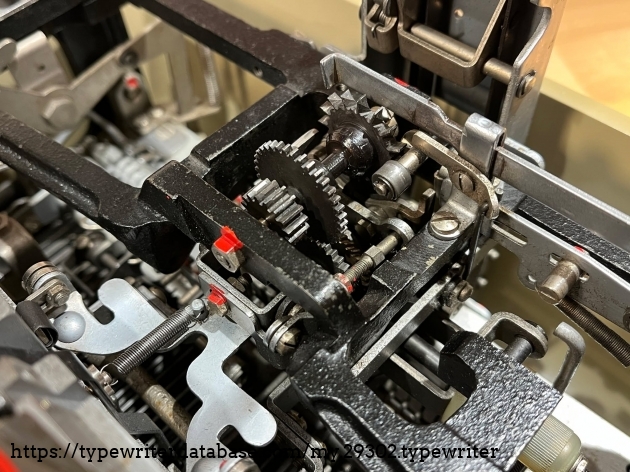
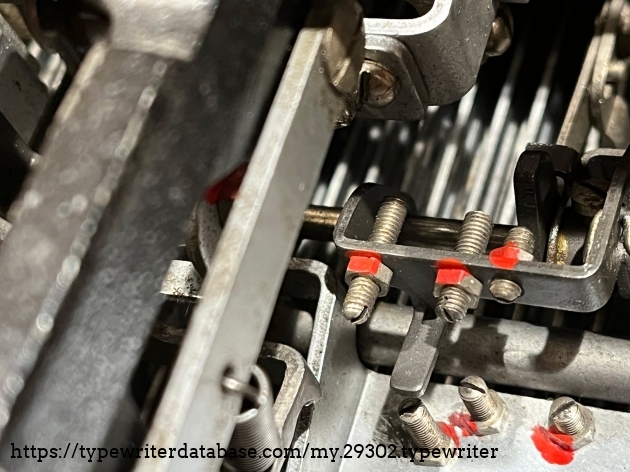
Assembly/quality control paint marks are literally on every fastener.

If it has threads, it got paint.

The escapement trip needed some adjustment to prevent accidental double-spacing.

Ribbon selector, with vibrator height adjustments for the 3 inked positions.  (None needed for stencil.)
Ribbon selector, with vibrator height adjustments for the 3 inked positions. (None needed for stencil.)

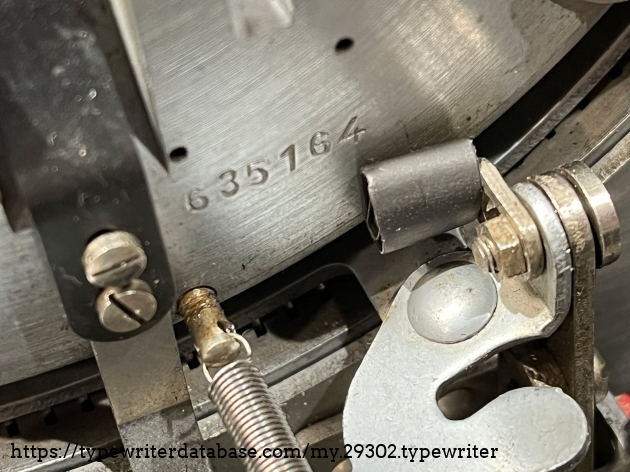
This number on the back of the segment is also stamped on the frame of the machine and the carriage.  It's often, understandably, mistaken for the serial number.
This number on the back of the segment is also stamped on the frame of the machine and the carriage. It's often, understandably, mistaken for the serial number.

The uncropped type sample--thanks Sophie!

As found.
As found.

Hunter: Brian Hagermann (bhagermann)

Brian Hagermann's Typewriter Galleries [ My Collection ] [ My Sightings ]

Status: Typewriter Hunter
Points: 291

In 2004, I found a 1949 Smith-Corona Clipper in a dumpster and I thought it was neat. I still think they're neat.


RESEARCH NOTE: When researching the Siemag L1 on a computer with lots of screen real estate, you may find that launching the Siemag Serial Number page and the Siemag L1 By Model/Year/Serial page in new browser windows can give you interesting perspectives on changes throughout the model series.