



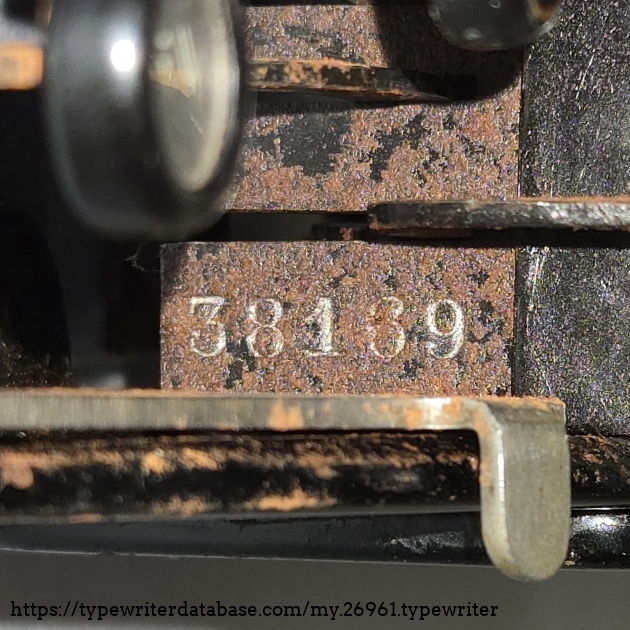
1919 Erika 2 #38169
Status: My Collection
Hunter: Photis Pascali (TheGreekTypewriterFreak)
Created: 12-13-2025 at 12:13PM
Last Edit: 12-13-2025 at 12:37PM
 Find on Ebay #AD
 Find on Etsy #AD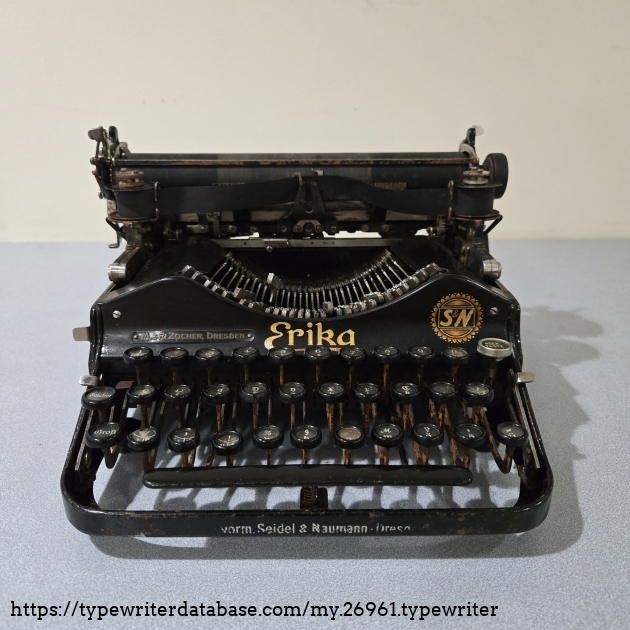
Description:
Regular Black Finish - German QWERTZ - 38169 - Fraktur Typeface
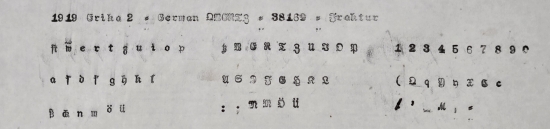
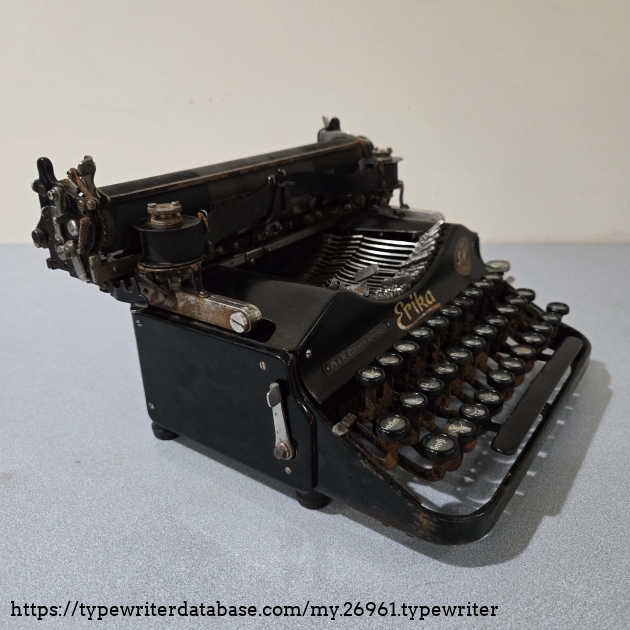
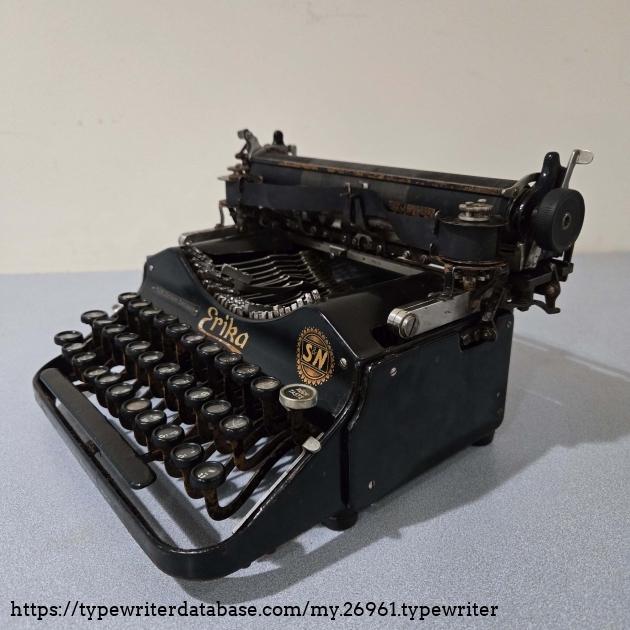
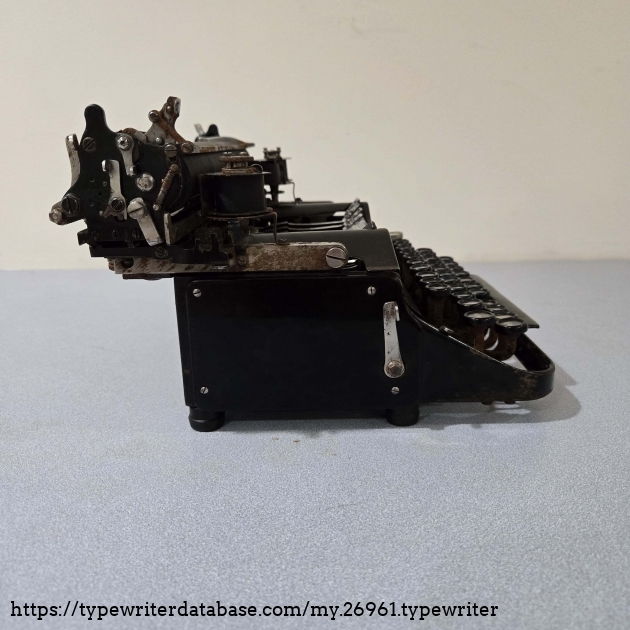
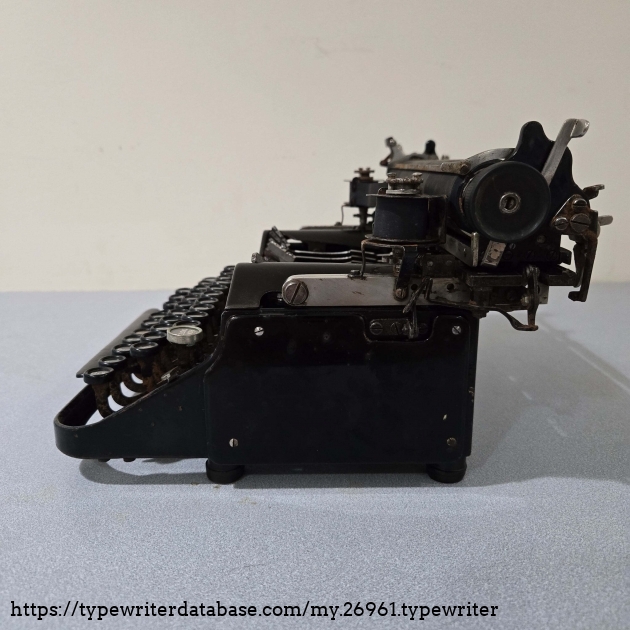
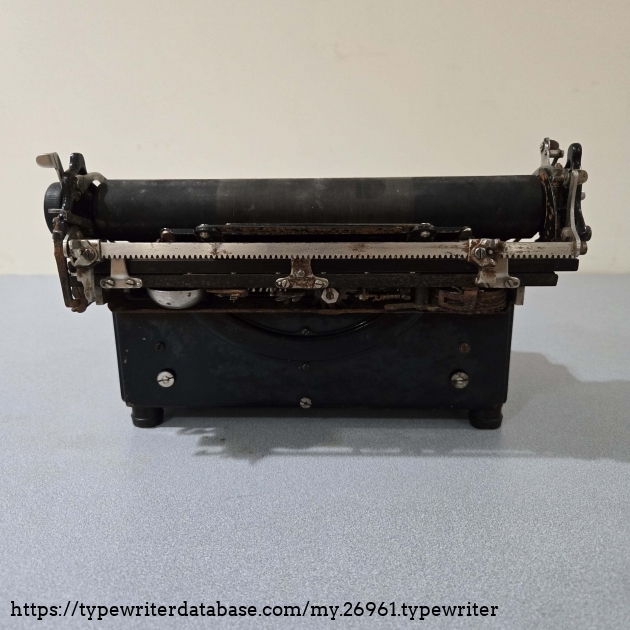
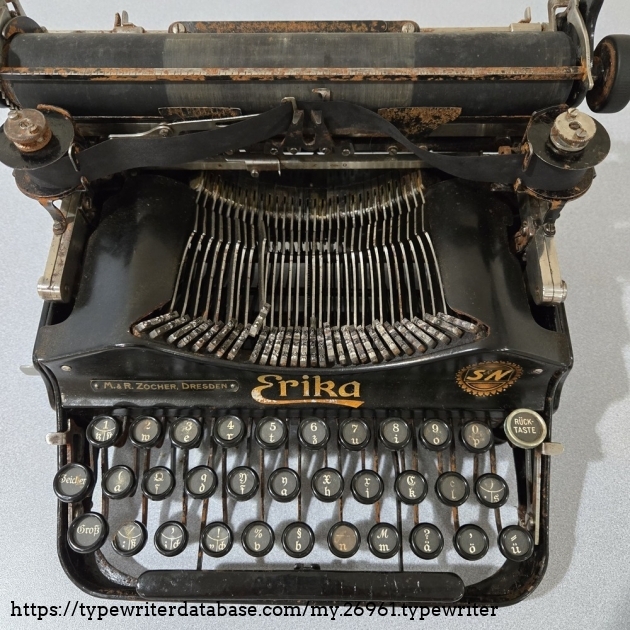
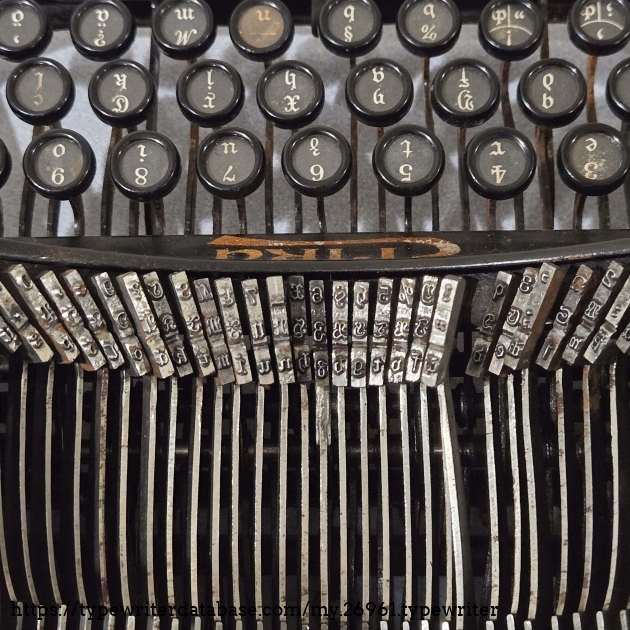
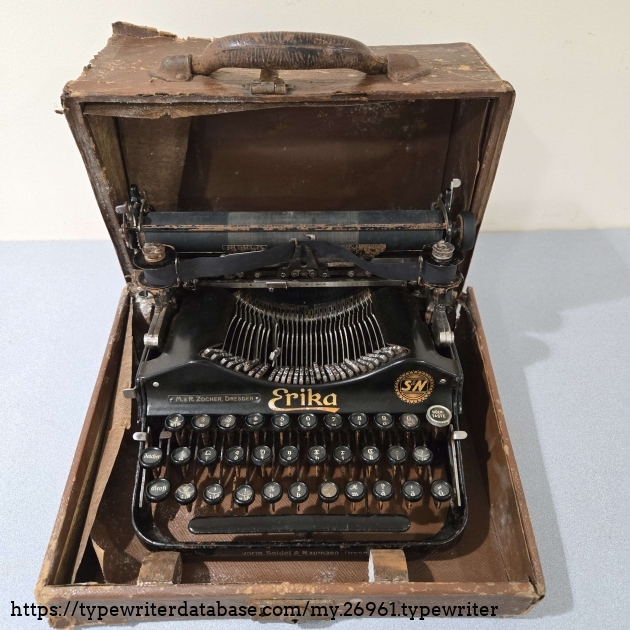
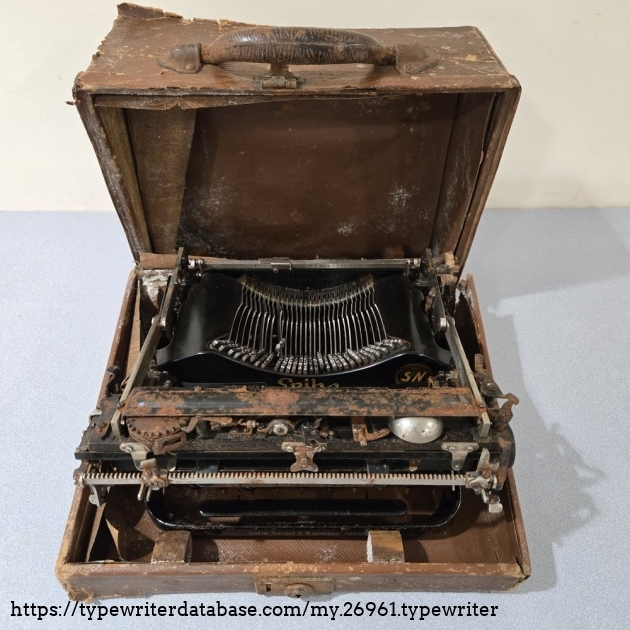
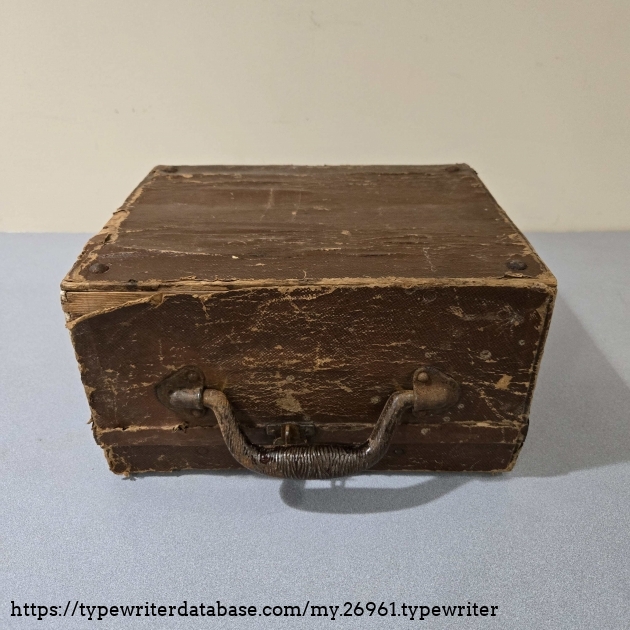
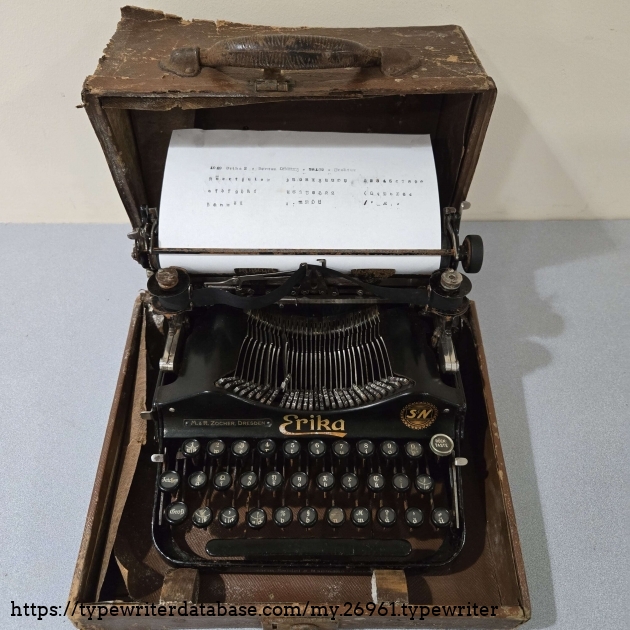
Bought from an online auction for $50 in England. Unfortunately, this machine is caked in rust, but the good news is that a majority of it is surface rust. I have already removed some of the rust from the machine. The carriage will need a new draw band string since the old one snapped, and the typewriter overall will need some good servicing. The case is in really poor shape as well; it's crumbling day by day, so that needs to be replaced soon. Some slugs are frozen shut because of the rust, so I wasn't able to use them, as you will see in the typeface specimen. The plastic ring around the eszett key also cracked and is missing a chunk. Also, the backspace key is the only key in the entire keyboard of this machine that isn't in the Fraktur style lettering, which is a bummer.
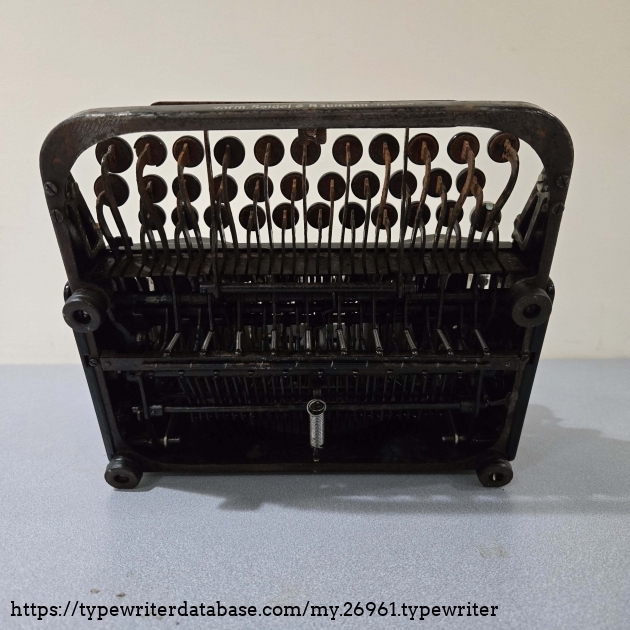
The slugs themselves are RaRo (Ransmayer & Rodrian) 42 slugs, which is pretty cool. Another neat feature, which I haven't seen on any other Fraktur folding Erikas, other than an example of an Erika 3, is that the key indexes are also in Fraktur. This can be really neat and really confusing at the same time, depending on how you view it. Another unique feature to note is that the letters Q, Y, X, and C are all symbols on this machine, and each uppercase and lowercase for each character is on a seperate key, prompting you to press the "Zeichen" (or sign/symbol) key on the machine instead of them being traditionally placed in the regular lowercase/uppercase format. The machine came from a firm in Dresden, Germany, called M & R (Max & Rudolph) Zocher, which initially started as a bookshop and stationery store in Dresden in the 1880s. They also operated a mechanized book printing shop and bookbindery on the premises, and later in 1926, the business grew into larger facilities throughout the area.
I plan to get this machine restored sooner or later to full working condition, but it's a really cool three-bank machine, and I just adore it.
Typeface Specimen:
Photos:
Hunter: Photis Pascali (TheGreekTypewriterFreak)
Photis Pascali's Typewriter Galleries [ My Collection ] [ My Sightings ]
Status: Typewriter Hunter
Points: 270
Currently, after some of the more rare typewriters with typefaces.
My typewriting collection began when I inherited an old Monarch No. 3 from an old family member, and that kickstarted everything for me.
Gladly willing to trade typewriters as well. Currently trying to learn how to properly restore and repair typewriters at the moment, but I have done some small-scale things here and there. I am ESPECIALLY after Greek typewriters as well as international keyboard machines (Greek, Cyrillic, Hungarian, Hebrew, and Arabic are my most sought after at the moment)
I go under the name "Swiss" on the TW Discord, Reddit, and eBay for those of you who might recognize my name from one of those sites.
RESEARCH NOTE: When researching the Erika 2 on a computer with lots of screen real estate, you may find that launching the Erika Serial Number page and the Erika 2 By Model/Year/Serial page in new browser windows can give you interesting perspectives on changes throughout the model series.